Divorce Mediation Process: How Professionals Keep Conversations on Track

Divorce Mediation Process: How Professionals Keep Conversations on Track

Why the Divorce Mediation Process Matters

If you work in divorce, you probably know your stuff. Lawyers know the law. Therapists understand the emotional ups and downs. Financial professionals can analyze the numbers and see the long-term picture. Most professionals show up with solid training and good intentions.

What often receives less attention is the divorce mediation process itself. While many professionals spend years learning law, finance, or psychology, fewer have had the opportunity to develop skills focused on managing the conversation in real time.

What Happens When the Process Breaks Down

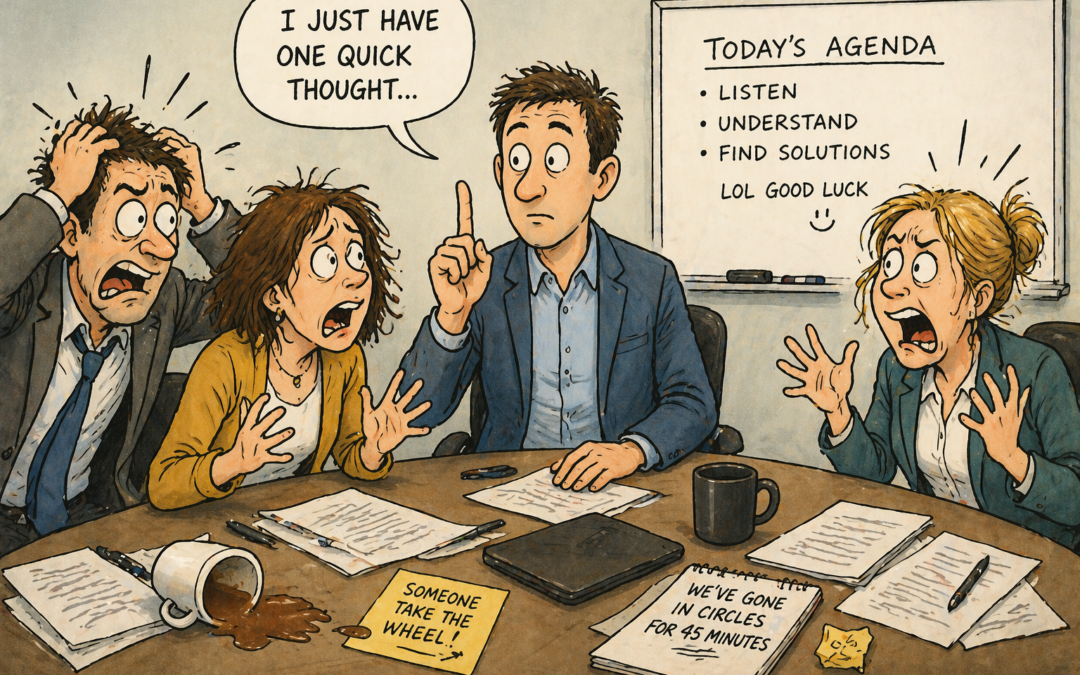
Gaps in the process tend to surface when emotions run high. People dig in, tempers flare, and conversations begin to drift. The legal issues may be clear, the financial information available, and the emotional patterns familiar. Even so, the discussion can still lose direction.

When that happens, the conversation loses its footing. A clear divorce mediation process helps bring it back into alignment. 

Managing Divorce Conversations Through Process

Managing a divorce conversation calls for close attention to how the discussion unfolds. Within an effective divorce mediation process, this includes pacing the conversation, narrowing the focus when needed, and helping people stay oriented toward decision-making without taking over the process.

This is often the point where experienced professionals start to feel strain. They know what needs to be decided, and guiding the conversation becomes more challenging once emotions begin to drive the room.

How a Clear Divorce Mediation Process Supports Professionals

A clear divorce mediation process provides a framework for moving through difficult conversations deliberately. It helps professionals distinguish between problem-solving and containment, as well as between listening and redirecting. A structured mediation session allows emotional expression while keeping the discussion productive.

Structure also supports neutrality. A clear process helps professionals stay grounded when pressure builds, rather than drifting toward rescuing one person, pushing for resolution too quickly, or disengaging when the conversation becomes uncomfortable. This kind of structure makes it easier to remain present, balanced, and effective.

Developing Process Skills

A reliable divorce mediation process develops through training, repetition, and real-time practice. Over time, the process becomes something professionals can rely on even when the room feels tense or unpredictable. 

Professionals who develop strong skills often describe similar results. Sessions run more smoothly, decision-making becomes clearer, and the work feels more sustainable. This reflects what happens when the conversation is managed with intention. 

Training Focused on the Divorce Mediation Process

That focus is central to our Divorce Mediation Training. The training is designed to help professionals build divorce mediation process skills deliberately and responsibly. Participants learn how to manage the conversation itself alongside a solid understanding of the issues involved. 

For professionals who want to work in divorce mediation with greater confidence, clarity, and consistency, this training represents an investment in professional judgment.


What Burnout in Family Law Is Trying to Tell You

What Burnout in Family Law Is Trying to Tell You

I was surprised by how many people saw themselves in my recent post about burnout in family law. Clearly, this is a problem that hits close to home for a lot of smart, capable professionals.

Burnout in Family Law Is More Than Exhaustion

We usually talk about burnout as if it’s just being tired or overwhelmed. The usual advice? Take a vacation, set better boundaries, toughen up. Sure, those things can help. But they miss the real question.

What if burnout is actually trying to tell you something?

Why Burnout Shows Up in Divorce and Family Law Work

In tough jobs like ours, burnout creeps in when you’re asked to do more than you have the tools for. It doesn’t happen all at once. It builds as you move from one tough conversation to the next. People are pushed to make decisions before they are ready, and there is an unspoken expectation that you will simply figure things out under pressure. It wears you down. Before you know it, you’re stuck in a loop: the more drained you get, the harder the job becomes, and the more you get drained. The problem shows up when the system does not give you the tools and structure you need to do the job well. This pattern is common in divorce work, where pressure and uncertainty are part of the daily landscape.

That gap is a big deal.

The Structure Problem Behind Family Law Burnout

For a lot of family law professionals, burnout is about being thrown daily into the middle of divorce and family fights without enough structure to handle what’s really going on. You’re sitting with people who are grieving and worried about their kids. Maybe they are locked in a battle. That kind of stuff really takes a toll. If you don’t have a clear process or real support, the stress just keeps piling up.

What Burnout in Family Law Is Signaling

In reality, burnout in family law is a warning light. It is telling you that something is off.  Perhaps you would feel differently with better tools and clearer steps, especially when emotions are high and the stakes are real.

That signal can be ignored. Many professionals do exactly that and continue pushing forward, assuming this level of strain is simply part of the job. But the costs start to mount up in predictable ways. A person starts to lose their judgment and focus. Physical and mental health start to diminish. What begins as manageable pressure can turn into something harder to contain.

Others treat burnout as information and adjust how they work.

One Way Professionals Respond to Burnout in Family Law

For some family law professionals, one response is mediation training. It offers a way to approach divorce conversations with more structure and intention. Learning how to guide discussions and manage intensity can change how divorce conversations unfold. It also helps keep responsibility where it belongs.

If burnout has been tapping you on the shoulder, maybe it’s time to listen.

What to Stop Doing in the New Year (If You Want Less Conflict)

What to Stop Doing in the New Year (If You Want Less Conflict)

January has a way of making people ambitious. It’s a good time to work on developing healthy conflict resolution habits. New plans show up fast, along with familiar patterns that never quite left.

Starting new habits for resolving conflict matters. So does dropping the habits that keep conflict alive. These conflict resolution habits can make a big difference.

I spend my workdays in the middle of disagreement, working in conflict resolution. Much conflict is expected. Most of the damage comes from a small set of repeat moves that feel justified in the moment and make things worse later.

Here are a few of those moves worth leaving behind to better support your resolution habits for dealing with conflict. These habits can strengthen your approach to handling conflicts effectively.

Stop trying to win conversations that have no path forward.

You can usually feel this one early. The other person is not curious. They are waiting to talk and gearing up for a pithy response. They already know what they are going to say.

When that is the posture, adding more explanation rarely helps. It tends to harden positions and drain energy.

The work here is discernment. You decide whether there is enough openness on the other side to justify staying engaged. If there is, you stay with it. If there is not, you step out and conserve your attention.

Figuring out whether to keep going or pull back is one of the most practical habits for resolving conflict effectively. It is essential for developing strong conflict resolution habits.

Stop responding immediately to every message.

Most tools now reward immediacy. Your body experiences that pace very differently.

When you respond instantly, you often answer from activation rather than judgment. A brief pause shifts that. It gives you a moment to settle and decide what you actually want to say.

A short pause often makes things way better. When a message lands and you feel charged, step away long enough to take a breath or two. Then come back and respond with the outcome you want in mind. Replies tend to land better when they are chosen rather than rushed. This is a small but powerful part of conflict resolution habits.

Stop treating intensity as a reliable guide.

Strong emotions create momentum. Anger and fear narrow attention and press for immediate action.

Intensity tells you that something matters to you. Judgment comes from how you choose to respond to it.

Good emotional intelligence comes from noticing your internal state. You recognize when you are activated and when the urge to react shows up. That awareness creates room to choose how you respond.

You are not a computer. Someone pushing your buttons does not determine what you do next. The response is still yours. Conflicts can be resolved by strengthening habits that control your reactions. Engraining conflict resolution habits in your routine will help manage your emotions effectively.

You hold on to the ability to decide how to proceed. Sometimes curiosity is useful. Other times a clear boundary or distance makes more sense.

Stop assuming disagreement means communication has collapsed.

People reach for the communication diagnosis all the time. They assume that, with better wording, agreement will follow.

Disagreement often means the communication was clear. People understand each other and still land in different places.

Politics makes this easy to see. Voters can understand a proposal and oppose it. Leaders respond by explaining it again, with better framing or more detail. The public response often stays the same, because the issue is preference and values.

That pattern shows up in families and workplaces every day.

The productive move is to treat the disagreement as real. You look for shared interests and workable tradeoffs, while accepting that some differences will remain.

Stop waiting for other people to manage your emotions.

Waiting for an apology, recognition, or agreement keeps your mood tied to someone else’s behavior.

A little bit of self-regulation puts you back in charge. It looks like slowing your breathing and choosing how you will engage. These are core conflict resolution habits that empower you to take charge of your emotions.

Self-regulation is a skill set. People build it through repetition.  You don’t have to rely on everyone around you to keep you calm.  You can do that yourself.

Stop treating conflict as proof that something is broken.

Conflict shows up anywhere there’s a history and important questions. It is part of what happens when people care about outcomes and relationships.

Peace is not the absence of conflict. It is the mastery of it.

Mastery shows up in how people handle their conflicts. When folks handle their conflict productively, then they find peace.

A quieter kind of resolution

If you choose just one New Year’s resolution to find more peace in life, choose this one:

I will slow down before I react.

Slowing down creates room for choice. It helps you notice whether a conversation has traction or whether distance serves you better.  It gives you the space you need to deliberately react on your own terms.

Over time, that shift will begin to make a difference. Your voice steadies and your decisions get cleaner, which reduces wear and tear in your relationships.

That’s a good place to start the year when focusing on building conflict resolution habits.

2025 Divorce Mediation Lessons: Reflections From a Year in the Room

2025 Divorce Mediation Lessons: Reflections From a Year in the Room

A year of divorce mediation always teaches me something, but the lessons rarely show up the way I expect. After so many years in the chair, I still find myself surprised by people. There is plenty of fear and frustration in the work, and I see my share of rough edges. Even so, this year brought moments that stopped me in my tracks in the best possible way. A few families showed a kind of steadiness and generosity that reminded me why this work matters.

One couple in particular stays with me. These folks made a choice to build their agreement around the needs of their children and each other, not what the law might dictate. The monied spouse said something I almost never hear in a mediation room. They said they did not care what the law said. They wanted this to be right. Period.

From there, everything shifted. They built a plan that kept their kids stable and gave both parents a firm footing. The agreement was generous and thoughtful, and their attorneys helped make sure the details worked. When we wrapped up, the room felt warm and steady, with no drama and no scorekeeping. These were simply two solid people trying to leave the marriage with their dignity intact and their children protected. Those kids will be all right.

The Weight People Carried This Year

Folks came into divorce mediation tired this year, more than usual. The world has been heavy. People are stretched financially, politically, and emotionally. They walk into my office already burned out and impatient, and that exhaustion spills right into the marriage and the divorce.

Fear was the emotion I saw most often. When people are afraid, they try to control everything in sight, including the schedule, the money, the rules, and each other. That kind of control only tightens the knot.

Parents were terrified their kids might be damaged by the divorce, yet oddly enough, the kids often seemed stronger than the parents. After the pandemic years, many young people bounced back with a kind of resilience that surprised everyone. The parents carried more anxiety than the kids did.

Financial stress showed up in every corner. Cash flow is tight. Housing in San Diego County feels impossible to find. People do not want to lose a low mortgage rate. Renting is often more expensive than staying put. Refinancing can blow up a budget. I saw more deferred sales this year than I have in a long time. Underneath all of it lives a quiet worry that retirement will not be affordable. Inflation spooked many people.

Slower Is Faster

When people arrived half-crazed and locked in fight-or-flight, the most reliable response was to slow the pace of the conversation, encourage a full breath, and allow the room to settle into a calmer rhythm.

People come in like cornered raccoons right now. You can feel the anxiety sitting in their bodies. Giving them a moment to breathe and think clearly changed everything. Slower truly was faster.

Empathy also needed more intentional coaching this year. In a polarized world, people forget how to imagine someone else’s experience. A simple question made a big difference. I would ask, “What would the other person need from a settlement?”

It pulled them out of their own fear and into a bigger frame.

The Patterns That Kept Showing Up

Throughout the year, I saw consistent patterns, each of which held a meaningful divorce mediation lesson.

Fear became control. People did not start out wanting to be controlling. They were scared. Naming that helped soften the room.

People misunderstood what the law requires. Parents came in insisting a 50/50 schedule was mandatory. It is not. The law cares about best interest, not perfect math. And support orders do not usually result in a 50/50 split of spendable income. Helping people let go of those myths took patience.

People thought they communicated poorly when they really just disagreed. That one came up constantly. They would say they had terrible communication. In reality, they communicated pretty well. They simply did not agree. When we talked about disagreement as a normal part of divorce, people stopped jumping to worst-case scenarios.

Generosity showed up more than expected. People erred on the side of kindness this year. When they shifted from protecting themselves to caring about the other person’s well-being, the whole energy changed.

I had to hold my own still center. Mediators live in the world too. This year tested that. My own anxiety about politics, economics, and humanity wanted to sneak into the room. I had to keep myself grounded.

Meditation helped. Talking with trusted colleagues helped. Even during a session, quiet mantras kept me steady: “They see the world differently than I do. That does not change who I am or how I show up.”

What People Did Better This Year

Even though the world felt mean and loud, people actually listened to each other more. Many couples had been in therapy before arriving in my office. They could not save their marriage, but the skills they learned in counseling helped them divorce with more care.

Couples relied on the skills they had practiced, including active listening, clearer communication, and a renewed sense of humility. Those efforts made a meaningful difference in how their mediations unfolded.

Heading Into the New Year

Peace is not the absence of conflict. It is the mastery of it.

People find peace by learning how to be steady when they disagree. Disagreement is normal. Fighting is optional. The moment people stop fighting, compromise becomes possible.

A Word to My Fellow Mediators

Mediators carry a lot, often more than people realize. It’s so important for us to allow ourselves room to breathe and remember that we are human in all of this. The work can knock any of us around. As we head into a new year, I hope we can find a little more steadiness, a little more kindness toward ourselves, and the space to keep mastering our craft.

Stay Calm With Clients When They Lose Their Cool

Stay Calm With Clients When They Lose Their Cool

Ever experience a scene like this? You’re in a conference room. The clock seems to tick louder than it should. Across the table, a client snaps. Another rolls their eyes and interrupts… yet again.  In a moment of frustration, someone pushes their chair back, almost storming out. In the heat of mediation, emotions simmer and occasionally boil over. If you’re a mediator, these are the button-pushers you meet time and again. You know the ones. The real trick is, what do you do to stay calm with clients when they lose it?

Calm is contagious. So is panic. When you stay steady, you give people a chance to settle. Staying centered calls for clear boundaries, solid training, and a grounded understanding of human emotion supported by steady, intentional breathing and genuine goodwill.

When I teach mediators to handle tense moments, I use a tool I like to share at my trainings and workshops:

Staying Calm with BREATHE

Use BREATHE to reset the room when things get out of balance. Picture a typical divorce-mediation scenario: When a spouse slams the table in frustration, this tool can help bring the situation back to calm.

 B – Breathe.

When working to stay calm with clients, take a slow, deliberate breath. It’s the quickest way to hit pause on your body’s fight-or-flight response and remind yourself you’re not in danger.

R – Recognize.

Pay attention to what’s going on inside you and in the room. Are you tense? Is someone about to blow? Awareness is your first line of defense.

E – Ease your body.

Unclench your fists. Drop your shoulders. Let gravity do its thing. When your body relaxes, your brain gets the message that it’s safe to stay calm with clients.

A – Anchor.

Remember why you’re there. Your job is to hold space for conflict, not to soak it up like a sponge. Let that keep you grounded.

T – Tune in.

Listen past the noise. What’s really going on? Is it fear, shame, or loss? Notice if there’s an underlying need that is going unmet, such as a lack of respect or control. By identifying these needs, you can guide your responses more effectively and with greater empathy. If you can spot the emotion, you can stay calm with clients instead of just reacting.

H – Hold boundaries.

Staying calm doesn’t mean you have to take abuse. Set your limits and protect the process. It’s better to be firm and kind than to fold or run away.

E – Engage with empathy.

When the storm passes, connect. Name the emotion. People calm down a lot faster when they know you see them where they are.

mediator staying calm when the clients are not

To Stay Calm With Clients, Make BREATHE a Practice

BREATHE can look like magic to people on the outside. However, it’s really just practice and muscle memory. I’ve had to use it more than once to stay calm with clients and keep me nailed to the floor. But the more I use it, the quicker I find my footing when things start getting rough in a session.

Being a peacekeeper means showing up and staying engaged, even when people are having a freak-out. Every tough session is a chance to get better at this and help steer the clients back to calm.

Shawn Weber, JD, CLS-F Mediation Trainer at the whiteboard

Come Train with Shawn

If staying calm with clients feels easier said than done, come train with us.  We’ll make it second nature.

California’s New Joint Petition: A Game Changer for Divorcing with Respect

California’s New Joint Petition: A Game Changer for Divorcing with Respect

Picture this: John and Lisa walk into the courthouse for the first time with nerves jangling. They hope to end their marriage without it becoming a war. They want to keep things civil, maybe even friendly, for the sake of their family. Starting January 1, 2026, California couples like John and Lisa get a new tool in the toolbox: the Joint Petition. For those of us in mediation or collaborative law, this is a game changer. It’s a big step toward what we’ve always wanted, helping families split up without tearing each other apart. This new process is right in line with what we do every day: keeping things peaceful and focused on the people, not the fight.

Let’s be honest: every divorce in California starts as a lawsuit. The very first page of the standard Petition (FL-100) hits you with a summons that says, “You are being sued.” It’s even repeated in two languages. That kind of language might make sense if you’re gearing up for a fight, but it’s always felt out of place for those of us who believe in mediation or Collaborative Divorce. Finally, with the new joint petition, we get a form that actually fits the way we want to help families, cooperatively.

Now, don’t get me wrong, this doesn’t mean the end of courtroom battles. If you want to fight it out, the old Petition and Response are still there, with all the usual drama. But for couples who’d rather skip the mudslinging, the joint petition takes away that first unnecessary punch. It lets you start the process together, not as enemies.

A Quick Primer on the New Law for California Joint Divorce Petitions

This change comes from SB 1427, which authorized the Judicial Council to create a joint filing process for dissolution and legal separation. The new procedure for joint petitions, implemented through the Judicial Council’s new FL-700 form, becomes available for use on January 1, 2026. The revisions to the California Family Code can be found in section 2320 and related provisions.

The key points:

  • The spouses file a joint petition (FL-700) if they agree to do so.
  • Both parties sign the same form.
  • There will be a new summons (FL-710) with no “service of process” and no adversarial caption. However, the Standard Family Law Restraining Orders still apply just like any other divorce filing. These orders automatically kick in to protect both parties by maintaining the status quo and ensuring peace during divorce proceedings, regardless of the filing method.
  • Both spouses make a general appearance by signing, which means the court has jurisdiction over both parties from the start.
  • The same 6-month waiting period still applies.

Why This Matters for Couples and Professionals

For families, this new form changes everything. It sets the right tone from the start, one of cooperation and respect. Now, instead of one spouse having to “sue” the other, you can file together. It’s a small shift in paperwork but a major change in energy. The joint petition says, “We’re doing this together.” That’s a big deal.

For mediators and collaborative professionals, this is a breath of fresh air. We can help clients complete one shared petition and move forward as co-petitioners. It’s a more human way to begin a hard process.

What to Know Before You File the California Joint Divorce Petition

Like any new system, the joint petition has some details to understand before jumping in:

  • General Appearance
    When both spouses sign the FL-700, they’re telling the court, “We’re here, and you have power over us.” You can’t later say, “Wait, I wasn’t served properly.” Be sure both understand that before signing.
  • Independent Advice
    Each spouse should have the chance to talk with an attorney before signing. Even in mediation, independent legal advice is important.
  • If Cooperation Fails
    If things change and one person wants to back out, either spouse can file a Notice of Revocation of Joint Petition (FL-720). From that point on, the case moves forward like a traditional divorce. The revoking spouse must file a new Petition (FL-100) or Response (FL-120) the same day they revoke.
  • No Defaults
    There’s no such thing as a default in a joint petition because the parties each are making a joint appearance when they file. Both must sign off on any amendments. If one person stops cooperating, progress can stall.
  • Court Transition Period
    Courts will need time to adjust. Expect a few hiccups as clerks and e-filing systems catch up early in 2026.

When Cooperation Breaks Down: Revoking a California Joint Divorce Petition

As with any cooperative process, it does not always stay that way. Not every joint filing stays joint. The new system anticipates that a previously non-adversarial case may later become adversarial. For that, the Judicial Council created Form FL-720 (Notice of Revocation of Joint Petition).

Here’s how it works:

  • Either party may revoke the joint petition at any time before the judgment is entered.
  • The filing spouse must serve the other with the FL-720 and then file it with the court.
  • Once filed, the joint petition is terminated. It does not simply pause or convert.
  • The form itself explains that Petitioner 1 becomes the Petitioner and Petitioner 2 becomes the Respondent.

That’s where things get interesting. The FL-720 directs that a new Petition (FL-100) or Response (FL-120) must be filed at the same time as the revocation. Whoever files the FL-720 is, by default, starting or continuing the action as the Petitioner. The other party has 30 days after service of the revocation to file their corresponding pleading.

Here’s a quirky twist: if Petitioner 2 files the revocation, the first thing the court sees might be a Response instead of a Petition. The law doesn’t say you can’t do it, but it flips the usual order on its head. We’ll see how court staff handle this one.

If you or your spouse plan to revoke, file both the FL-720 and the proper initiating pleading on the same day, and carefully track the 30-day response period. If you receive a Notice of Revocation of Joint Petition, remember you have 30 days to respond.

A Step Toward a Less Adversarial System

This is a big step toward changing the culture of divorce in California. The California joint petition acknowledges what many of us have long known: not every divorce fits neatly into the “plaintiff versus defendant” box. For couples who want to stay out of the mud, this form opens a cleaner, kinder path, and gives families a better way to begin.

Of course, it’s still important to get sound legal and financial advice before signing anything. But all things considered, it’s a win for couples who want to stay out of the courtroom crossfire. 

african american woman working on her California joint divorce petition

Ready to move forward with respect?

Let’s talk about how the new California Joint Divorce Petition can help you divorce peacefully.