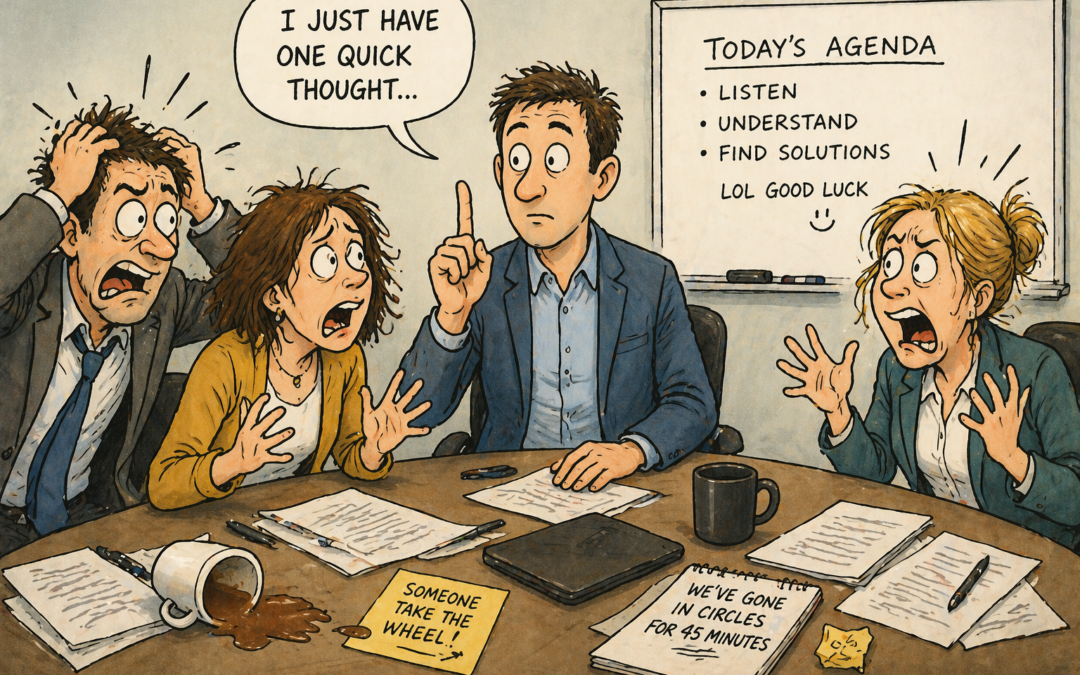
What Burnout in Family Law Is Trying to Tell You

What Burnout in Family Law Is Trying to Tell You

I was surprised by how many people saw themselves in my recent post about burnout in family law. Clearly, this is a problem that hits close to home for a lot of smart, capable professionals.

Burnout in Family Law Is More Than Exhaustion

We usually talk about burnout as if it’s just being tired or overwhelmed. The usual advice? Take a vacation, set better boundaries, toughen up. Sure, those things can help. But they miss the real question.

What if burnout is actually trying to tell you something?

Why Burnout Shows Up in Divorce and Family Law Work

In tough jobs like ours, burnout creeps in when you’re asked to do more than you have the tools for. It doesn’t happen all at once. It builds as you move from one tough conversation to the next. People are pushed to make decisions before they are ready, and there is an unspoken expectation that you will simply figure things out under pressure. It wears you down. Before you know it, you’re stuck in a loop: the more drained you get, the harder the job becomes, and the more you get drained. The problem shows up when the system does not give you the tools and structure you need to do the job well. This pattern is common in divorce work, where pressure and uncertainty are part of the daily landscape.

That gap is a big deal.

The Structure Problem Behind Family Law Burnout

For a lot of family law professionals, burnout is about being thrown daily into the middle of divorce and family fights without enough structure to handle what’s really going on. You’re sitting with people who are grieving and worried about their kids. Maybe they are locked in a battle. That kind of stuff really takes a toll. If you don’t have a clear process or real support, the stress just keeps piling up.

What Burnout in Family Law Is Signaling

In reality, burnout in family law is a warning light. It is telling you that something is off.  Perhaps you would feel differently with better tools and clearer steps, especially when emotions are high and the stakes are real.

That signal can be ignored. Many professionals do exactly that and continue pushing forward, assuming this level of strain is simply part of the job. But the costs start to mount up in predictable ways. A person starts to lose their judgment and focus. Physical and mental health start to diminish. What begins as manageable pressure can turn into something harder to contain.

Others treat burnout as information and adjust how they work.

One Way Professionals Respond to Burnout in Family Law

For some family law professionals, one response is mediation training. It offers a way to approach divorce conversations with more structure and intention. Learning how to guide discussions and manage intensity can change how divorce conversations unfold. It also helps keep responsibility where it belongs.

If burnout has been tapping you on the shoulder, maybe it’s time to listen.

Dividing the Stuff: Dividing Personal Property in a Divorce Without Losing Your Cool

Dividing the Stuff: Dividing Personal Property in a Divorce Without Losing Your Cool

For many people, dividing personal property in divorce ends up being harder than dividing money.

It surprises them.

The house, the retirement accounts, even support can feel abstract. The furniture, dishes, artwork, photos, and small personal items are not. Those things lived with you. They witnessed the relationship. They carry stories. The house is the marriage museum.

I have seen couples who resolved complex financial issues fairly quickly, only to grind to a halt over pots and pans, the washer and dryer, or a box of knick-knacks collected over years of shared life. Often the items themselves are not especially valuable. What they represent is.

A piece of artwork recalls a trip taken when things were still good. The silver marks a milestone anniversary. A small figurine was a gift from a child. By the time people reach this stage of divorce, they are already emotionally spent. Dividing personal property can reopen grief in a very tangible way.

Below are some practical guidelines that consistently help people move through this part of the process with less conflict and less expense.

Start with realistic values

When dividing personal property in a divorce, courts generally value household items at garage sale value. That is a useful reality check.

Unless you own rare artwork, high-end antiques, or something truly unique, most household items have limited resale value. Emotional meaning can quietly inflate perceived worth, which makes agreement harder. When in doubt, ask a simple question: what would a neutral third party realistically pay for this item used?

Keeping values grounded helps keep conversations grounded.

Handle most items without lawyers

It rarely makes sense to involve attorneys in deciding who gets the couch, the coffee maker, or the bath mat. Legal fees add up quickly, and disputes over dividing personal property in a divorce can consume time and money out of proportion to their importance.

For high-value or unusual items, professional guidance can be appropriate. For most household property, people are better served handling it directly or with the help of a mediator or coach.

Create an inventory before dividing anything

Before decisions are made, it helps to know what actually exists.  In other words, it helps to define the pie before dividing the pie.

Some people prefer a written list. Others find it easier to walk through the home with a phone or camera and record each room. That record can then be used to create a list later. The method matters less than having a shared reference point.

When dividing personal property in a divorce, an inventory reduces suspicion and keeps the process organized.

Use a simple sorting system

One approach that works well for dividing personal property in a divorce is to sort items into clear categories:

  • Items one person will keep
  • Items the other person will keep
  • Items to sell and divide the proceeds
  • Items to donate or discard

Notice what is missing. There is no category for items people cannot agree on.

When agreement is impossible, selling or donating the item is often the cleanest solution. Another option is taking turns choosing disputed items until they are gone. For highly sentimental objects, some couples choose to pass them on to their children.

The goal is progress, not perfect fairness.

Make a plan for photos and videos

Photographs and videos deserve special care.

I often recommend setting a date when both people will make photos and videos from the marriage available to each other. Each person can then choose what they want duplicated. With current technology, scanning and digital copying are relatively easy and affordable. Sharing duplication costs evenly tends to feel fair.

This approach allows both people to preserve memories without turning them into bargaining chips.

Understand how the law treats pets

Many people are surprised to learn that, legally, pets are considered property. Courts generally have limited patience for extended pet disputes and may order outcomes that satisfy neither person.

Because of that reality, it is usually far better for people to work out pet arrangements themselves. Focus on the animal’s needs and daily life rather than ownership language. Doing so often leads to better outcomes for everyone involved.

Take extra care when safety is an issue

In cases involving domestic violence or restraining orders, dividing personal property requires additional planning.

Direct contact may not be appropriate or allowed. Attorneys, mediators, or agreed-upon third parties can help coordinate inventories and exchanges. Legal orders must be respected, even when emotions are high or items feel urgent.

Dividing personal property in a divorce isn’t worth compromising safety or violating court orders.

See the opportunity in the process

Many people eventually describe dividing personal property in a divorce as unexpectedly clarifying.

Letting go of objects tied to an old chapter can create space for something new. When the process is handled thoughtfully, it can feel less like a loss and more like a transition.

If the emotional weight becomes overwhelming, a divorce coach or neutral professional can provide support at a fraction of the cost of extended legal conflict.

Dividing personal property does not have to become another battleground. With patience, structure, and realistic expectations, most couples can move through it with minimal professional intervention.

At the end of the day, these are things. How you handle them will shape how much conflict you carry forward.ips to divide personal property, san diego divorce, san diego divorce attorney, Shawn Weber, san diego divorce mediator

What Mediators Wish Lawyers Knew

What Mediators Wish Lawyers Knew

Lawyers and mediators may work in the same neighborhood, but let’s be honest, we don’t always speak the same language. I say that as someone who’s been on both sides of the table. Some of my best friends are lawyers. Heck, I am one. Still, after years in the trenches, I’ve noticed we often talk past each other.

A good lawyer knows how to spot risk and protect the client while pushing for an edge without crossing the line. That balance takes judgment and a clear head. A good mediator is different. The mediator stays steady in the storm and helps people find a way out of the mess. These are two very different jobs. When lawyers show up to mediation expecting a courtroom battle, or mediators expect lawyers to just drop their advocacy hats, nobody wins. Everyone leaves annoyed.

I really want to improve mediation for lawyers (and for me and my clients). So, here’s my wish list of things I wish every lawyer knew about mediation and their role in it.

Let’s clear up a big myth right out of the gate: mediation isn’t just negotiation with a new name tag.

Mediation for lawyers isn’t just another round of hardball bargaining. It’s a process that takes people from venting and drama to facts and understanding, and (if we’re lucky) to a real solution. If you treat it like a street fight, you’ll miss the whole point.

Most clients show up to mediation because they’re worn out from fighting. They want a place to be heard and to keep their dignity intact. If a lawyer storms in ready for battle, that safe space disappears in a flash. Sure, the client might feel good for a minute having a gladiator in their corner, but the fallout can last for years.

Good lawyers know how to read the room. The mediator’s office is not a courtroom. It is closer to a hospital. Everyone is already bleeding, at least a little.

We are not your opponent—and we are not the judge.

Mediators are neutral. Our job is not to trick, trap, or favor anyone. We do not make rulings, decide who is right, or hand out victories.

So, you don’t need to argue your case like you’re in front of a judge. I don’t need your closing argument or a play-by-play on how you’ll crush the other side. And please, spare me the rant about how terrible the other lawyer or client is. None of that gets us any closer to peace.

In mediation, the only story that counts is the one that helps both people see a way forward. Once lawyers realize the mediator isn’t their rival or the judge, everyone relaxes and breathes easier. The work starts to move.

If I push back, it’s not because I’m taking sides. I’m just stress-testing the deal. I want to make sure your client can live with it six months down the road, when the dust settles.

Preparation also deserves attention: it is an act of kindness.

Mediation is only as good as the prep work behind it. I’ve seen lawyers walk into the first session with no clue about the numbers, no idea what their client can or can’t handle emotionally, and no plan except, “Let’s wing it.” That’s not advocacy. That’s just making it up as you go.  Frankly, it’s unethical, incompetent representation.

When working with mediators, I wish more lawyers would help clients figure out what really matters before their session. Not just, “How much do you want?” but, “What are you willing to give up, put up with, or let go of to get some peace?” When you know those answers, your client’s voice is much more credible.

You don’t need to present a multi-volume treatise on why your client is awesome. You need clarity. A client who knows what they want is a client with real power.

Mediation for lawyers is not always about winning.

Law school teaches us to win at all costs. Mediation flips that idea on its head. Winning here means helping people turn the page and find peace they can live with.

That doesn’t mean you stop being an advocate. It just means you do it differently. Instead of trying to win over a judge, you help your client get to yes with a good business decision.

I’ve seen some truly great lawyers who just get this. They use their influence to calm things down, not stir the pot. They know when to step in and when to let the client take the lead. Those are the lawyers clients remember with gratitude, not resentment.

When working with mediators, please help your client own the agreement.

When the ink dries on a settlement, the client should feel like it’s their deal instead of something their lawyer or the mediator pushed them into.

If you’re advising from the sidelines, try being a guide, not a gatekeeper. Ask questions. Challenge assumptions. But don’t rewrite the whole deal. Clients need to stand on their own two feet by the end of their mediation.

One of the best compliments I can give a lawyer is, “Your client stayed empowered.” If I can say that, you nailed it.

Your presence matters more than your words.

Mediation rooms are emotional minefields. Clients notice every sigh, every eye roll, every sideways glance. If you look impatient, dismissive, or bored, they’ll take it as a sign you disapprove. That can wipe out hours of progress in seconds.

When lawyers bring calm and professionalism into the room, it changes everything. You don’t have to say much, and you certainly don’t need to give a big speech. Sometimes, just sitting back with quiet confidence helps the client relax. The best mediations end with a deep breath and a quiet nod.

The best lawyers make the mediator’s job easier.

I have a lot of respect for lawyers who get that mediation is a team sport. They know when to talk, when to listen, and when to let silence do the heavy lifting. They help the process instead of trying to run the show.

These lawyers know their credibility is their best asset. When they talk, people listen—because they’re solid, informed, and decent.

If you’re that kind of lawyer, mediators love working with you. You make it possible for us to do our jobs. More importantly, you help families move forward in peace instead of bitterness.

The bottom line

Mediation depends on good lawyers working with mediators. When they understand the process, everything runs smoother. They bring structure, stability, and a sense that the work is going somewhere real.

Mediators long for you to shift your role from fighter to builder. We value your advocacy. Just aim it at lasting peace.

To me, that’s what real mastery looks like.

Ready to bring more peace into your work?

Learn to master conflict with Shawn Weber in our career changing 40-Hour Divorce Mediation Training.

Early intervention:  Why mediation early in a family law case can save a fortune in fees and stress.

Early intervention: Why mediation early in a family law case can save a fortune in fees and stress.

As a certified family law specialist (CLS-F)[i], I have been involved in divorce mediation and alternate dispute resolution (ADR) for more than 15 years.  I regularly serve as a pro tem settlement judge on the Mandatory Settlement Conference (MSC) Panel with the San Diego County Superior Court.  While I enjoy helping folks through their MSCs, the help is simply too little too late for many people.  Often preparation for the MSC is nearly as stressful and costly as preparing for the trial.  In addition, lawyers need to certify that discovery is complete and prepare elaborate briefs.  Waiting until the very end of a case to attempt mediation does the parties and the professionals a great disservice.  I see this in the pained and stressed-out expressions on parties and counsel at the MSCs I facilitate.

There are many options at the beginning of the case to settle issues, manage discovery concerns and resolve unnecessary conflict.  Even (and especially) high conflict cases can benefit from earlier intervention with a mediator to short circuit the conflict.  Attorneys benefit from early mediation because it helps them settle the cases that can settle.  That frees them up to focus on trials for cases that won’t settle.

Here are some ideas for how you can engage the ADR services of a mediator early in your family law case:

Meet and Confer on Steroids.

Every family law attorney is aware of the requirement for the “meet and confer” conference. Too often it’s simply given lip service by a short phone call to opposing counsel without discussing the issues.  Because lawyers sometimes give less attention to what needs to happen to settle, the case stalls.  Why not have a facilitated meet and confer settlement conference to identify the issues and formulate a plan for a swift conclusion?

Discovery Management.

Often the most expensive part of a case is the discovery, which involves elaborate and arcane procedures to gather as much evidence as possible. Sometimes this is whether the case needs the information or not.  The adversarial process spurs less and not more cooperation in discovery.  This can lead to months or even years of discovery wars.  Why not use a mediator to help “referee” the discovery? Most discovery can be provided informally with much less cost.  A mediator can help facilitate the discovery process to specifically target discovery needs and conclude the case with much less rancor and headache for the lawyers and cost to the parties.

Managing the High Conflict Case.

There is a common misconception that people cannot mediate high conflict cases.  That’s simply not true.  Most high conflict behavior in divorce cases is based on fear and hurt.  So, engaging a good mediator early in the process reduces conflict by managing the fight-or-flight response.  Court tends to exacerbate and actually encourage high conflict pathologies.  Rather than encouraging discord with a fight at court, consider short-circuiting conflict with a mediator experienced in high conflict.  Consequently, if parties learn early how to interact productively, it makes the rest of the case go more smoothly.

Use Early Mediation to Resolve Interim Issues.

The terribly backlogged Family Courts sometimes take months to hear even the most routine (and sometimes pressing) interim motions.   I can usually help as a mediator to resolve interim questions like support and custody in a fraction of the time and cost compared to filing a Request for Order.  Because a mediated settlement conference efficiently resolves interim issues, the parties can relax a little more and focus on concluding the case rather than reacting to interim problems.

Consider a Court-Ordered Family Resolution Plan and Use of ADR  Pursuant to Family Code Section 2451.

One little-known provision of the Family Code involves the use of Alternate Dispute Resolution (ADR) as part of a court-ordered family centered case resolution plan as described in Family Code section 2451California Rule of Court 5.83 describes how the plan can be implemented.  Parties can appoint a case manager as part of the plan and can also apply Code of Civil Procedure section 639 to appoint the case manager as a discovery referee.  Further, Family Code section 2451(a)(3) gives protection to attorneys who follow any discovery plans adopted as part of a court-ordered family resolution plan as follows:

“Limitations on discovery, including temporary suspension pending exploration of settlement. There is a rebuttable presumption that an attorney who carries out discovery as provided in a family centered case resolution plan has fulfilled his or her duty of care to the client as to the existence of community property.”

I have used this procedure to great effect.  It can do a lot to reduce costs and keep the case moving quickly towards settlement.

Let Us Move Your Case Past Stuck.

Because there are many ADR options beyond an end-of-case settlement conference where a mediator can make a huge difference, the key is to start early.  At Weber Dispute Resolution, we have the training, skills, and experience to get your family law case past stuck.  That’s because our approach serves to support existing relationships with legal counsel and will not waste family wealth by exacerbating family conflict.  Experience first-hand the difference a dolphin lawyer can make.

[i] Certified Specialist – Family Law, The State Bar of California Board of Legal Specialization.

"neutral

"Need

Consider a mediated Settlement Conference with Weber Dispute Resolution.  Call us at 858-410-0144 or click the button to learn more.

Early intervention:  Why mediation early in a family law case can save a fortune in fees and stress.

Early intervention: Why mediation early in a family law case can save a fortune in fees and stress.

As a certified family law specialist (CLS-F)[i], I have been involved in divorce mediation and alternate dispute resolution (ADR) for more than 15 years.  I regularly serve as a pro tem settlement judge on the Mandatory Settlement Conference (MSC) Panel with the San Diego County Superior Court.  While I enjoy helping folks through their MSCs, the help is simply too little too late for many people.  Often preparation for the MSC is nearly as stressful and costly as preparing for the trial.  In addition, lawyers need to certify that discovery is complete and prepare elaborate briefs.  Waiting until the very end of a case to attempt mediation does the parties and the professionals a great disservice.  I see this in the pained and stressed-out expressions on parties and counsel at the MSCs I facilitate.

There are many options at the beginning of the case to settle issues, manage discovery concerns and resolve unnecessary conflict.  Even (and especially) high conflict cases can benefit from earlier intervention with a mediator to short circuit the conflict.  Attorneys benefit from early mediation because it helps them settle the cases that can settle.  That frees them up to focus on trials for cases that won’t settle.

Here are some ideas for how you can engage the ADR services of a mediator early in your family law case:

Meet and Confer on Steroids.

Every family law attorney is aware of the requirement for the “meet and confer” conference. Too often it’s simply given lip service by a short phone call to opposing counsel without discussing the issues.  Because lawyers sometimes give less attention to what needs to happen to settle, the case stalls.  Why not have a facilitated meet and confer settlement conference to identify the issues and formulate a plan for a swift conclusion?

Discovery Management.

Often the most expensive part of a case is the discovery, which involves elaborate and arcane procedures to gather as much evidence as possible. Sometimes this is whether the case needs the information or not.  The adversarial process spurs less and not more cooperation in discovery.  This can lead to months or even years of discovery wars.  Why not use a mediator to help “referee” the discovery? Most discovery can be provided informally with much less cost.  A mediator can help facilitate the discovery process to specifically target discovery needs and conclude the case with much less rancor and headache for the lawyers and cost to the parties.

Managing the High Conflict Case.

There is a common misconception that people cannot mediate high conflict cases.  That’s simply not true.  Most high conflict behavior in divorce cases is based on fear and hurt.  So, engaging a good mediator early in the process reduces conflict by managing the fight-or-flight response.  Court tends to exacerbate and actually encourage high conflict pathologies.  Rather than encouraging discord with a fight at court, consider short-circuiting conflict with a mediator experienced in high conflict.  Consequently, if parties learn early how to interact productively, it makes the rest of the case go more smoothly.

Use Early Mediation to Resolve Interim Issues.

The terribly backlogged Family Courts sometimes take months to hear even the most routine (and sometimes pressing) interim motions.   I can usually help as a mediator to resolve interim questions like support and custody in a fraction of the time and cost compared to filing a Request for Order.  Because a mediated settlement conference efficiently resolves interim issues, the parties can relax a little more and focus on concluding the case rather than reacting to interim problems.

Consider a Court-Ordered Family Resolution Plan and Use of ADR  Pursuant to Family Code Section 2451.

One little-known provision of the Family Code involves the use of Alternate Dispute Resolution (ADR) as part of a court-ordered family centered case resolution plan as described in Family Code section 2451California Rule of Court 5.83 describes how the plan can be implemented.  Parties can appoint a case manager as part of the plan and can also apply Code of Civil Procedure section 639 to appoint the case manager as a discovery referee.  Further, Family Code section 2451(a)(3) gives protection to attorneys who follow any discovery plans adopted as part of a court-ordered family resolution plan as follows:

“Limitations on discovery, including temporary suspension pending exploration of settlement. There is a rebuttable presumption that an attorney who carries out discovery as provided in a family centered case resolution plan has fulfilled his or her duty of care to the client as to the existence of community property.”

I have used this procedure to great effect.  It can do a lot to reduce costs and keep the case moving quickly towards settlement.

Let Us Move Your Case Past Stuck.

Because there are many ADR options beyond an end-of-case settlement conference where a mediator can make a huge difference, the key is to start early.  At Weber Dispute Resolution, we have the training, skills, and experience to get your family law case past stuck.  That’s because our approach serves to support existing relationships with legal counsel and will not waste family wealth by exacerbating family conflict.  Experience first-hand the difference a dolphin lawyer can make.

[i] Certified Specialist – Family Law, The State Bar of California Board of Legal Specialization.

"neutral

"Need

Consider a mediated Settlement Conference with Weber Dispute Resolution.  Call us at 858-410-0144 or click the button to learn more.