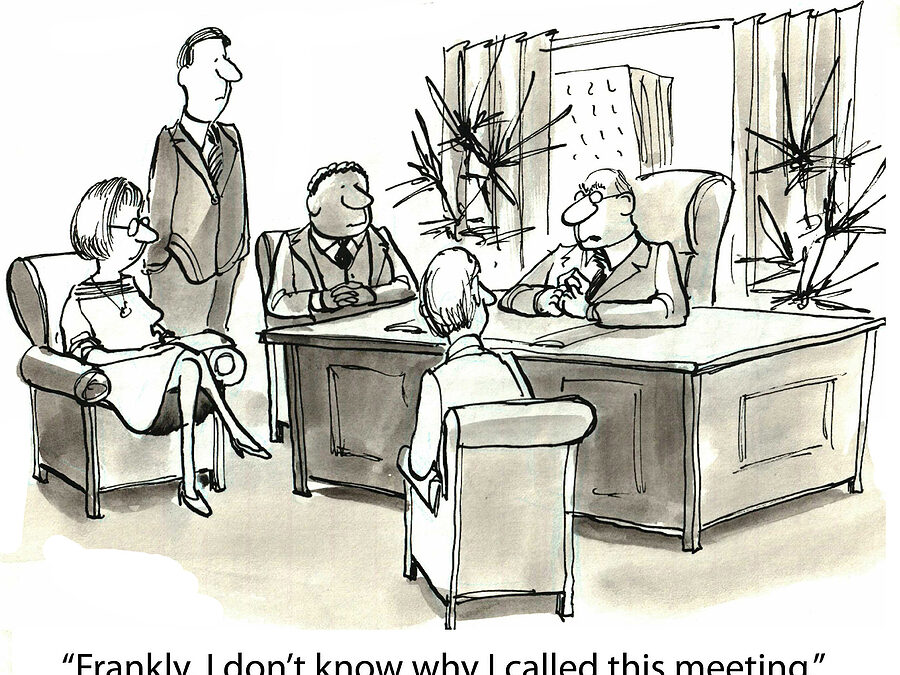
The Top Ten Ways Practitioners Screw Up Collaborative Divorce Cases

The Top Ten Ways Practitioners Screw Up Collaborative Divorce Cases

I have a lot of respect for collaborative professionals. Most people who choose this model are trying to do right by their clients. I still see the same problems show up again and again. There are others, but these are the ones I see most often. These are the top ten collaborative divorce mistakes I see professionals make.

1. Working harder than the client

This shows up all the time. The professionals are pushing the case forward while the clients stay passive. If the clients are not doing the work, the case will not move. Clients need to have ownership of their own case. When the professionals care more about the case than the clients do, things are out of balance. Good teams show clients how to take ownership of their own lives and their own conflict. The team will be gone when the case is over. Clients need to be able to resolve differences without professional intervention. If they do not build that capacity, the agreement will be less durable and they will be back to clean up a mess without the skills to fix it. Otherwise, the attorneys spin their wheels and the clients gain very little.

2. Overcomplicating the collaborative divorce process

Some teams build processes that look impressive. They create forms, binders, checklists, and layers of structure. Much of it does not move the case forward. Clients get buried in paperwork that does not help them make decisions, and the process slows down. It also gets expensive fast. Clients end up sitting in meetings going through forms and written materials while everyone in the room is billing. That turns people off. I have seen many cases ruined by this. We love our processes, but we cannot get arrogant and self-righteous about them. The clients do not care about our forms. They want to see that the time they are paying for actually moves their case forward. If the process or form does not move the ball quickly, it is best not to use it.

3. Failing to treat client fees with respect in collaborative practice

Clients are paying for this process. It is disrespectful to insist on expensive meetings and layers of process without stopping to ask whether they are necessary. One meeting with a full team can be expensive, and that matters to people.

I had a case where the clients were increasingly frustrated with the cost. They felt like they were paying for meetings where nothing meaningful was happening. Instead of acknowledging that concern and tightening the process, the team doubled down and framed the issue as the clients being uncooperative.

The clients were raising a real issue. They were watching their savings go toward meetings that felt repetitive and unproductive. That deserved a direct response and a course correction.

There is a level of arrogance in assuming the problem sits with the clients while ignoring an overbuilt process and poor cost management.

Instead of addressing the clients’ legitimate concerns, the team gave them a lecture. The case unraveled soon after.

When professionals ignore cost, clients lose trust. If you want that trust, use judgment about how you spend their money.

4. Group think and holding back real feedback in collaborative teams

Teams want to get along. That can turn into everyone agreeing because it feels easier. Weak ideas go unchallenged and the case starts to drift.

Early in my career, I had a case fall apart. In the debrief, I shared what I thought caused it. I had disagreed with a direction one of the coaches was taking, but I did not say anything at the time. He asked me why I waited until the debrief to speak up. The answer was simple. I was new and I wanted to impress him.

You see this between professionals. Something feels off in how part of the case is being handled, and nothing gets said. People stay quiet because they do not want to step on each other, or they tell themselves it is not their place. Then it comes out later, after the case has already taken a hit.

If something is off, say it when it matters. Respectful disagreement keeps the team oriented and the case moving.

5. Not being available in collaborative cases

Collaborative cases need momentum. Setting meetings can feel like programming a NASA shuttle launch because you are coordinating multiple professionals. It only works if everyone treats availability as part of the job.

If you are hard to schedule or slow to respond, you are not just affecting your piece of the case. You are affecting the entire team. Other professionals are holding space, clients are waiting, and the process loses traction.

I had a case where one professional was consistently unavailable for team calls. Then an emergency developed and we needed to meet. We offered after hours. We offered weekends. Nothing worked. Before we could get the team together, the situation escalated and one party left the collaborative process and filed in court.

The case unraveled because the team could not get in the same room to address a problem that could have been handled. Availability is part of professional responsibility in this model. If you cannot show up when it matters, the process cannot hold.

6. Becoming part of a client’s emotional dynamic in collaborative practice

A client is anxious, angry, or reactive, and a professional gets pulled into it. You start matching tone, taking sides, or trying to fix the client instead of managing the process. That shift is subtle and costly. The team loses its center and the case starts to run on the client’s emotional rhythm. You see longer emails, sharper exchanges, and decisions driven by reaction instead of judgment. It also puts pressure on the other professionals, who now have to manage both the clients and a teammate who is inside the dynamic. Your role is to hold structure and pace. When you stay there, clients have a chance to settle and think. When you leave it, the process follows you into the chaos.

7. Drifting out of your role on a collaborative team

Some overlap is useful. Too much creates confusion.

Attorneys can lose their way by trying to control the financial reporting or by stepping into coaching. That pulls the case toward control instead of structure and pace.

Financial professionals can lose their way by turning the work into analysis for its own sake. More models, more scenarios, more data. The numbers get more complex while decisions get harder. Clients disengage.

Coaches can lose their way by taking sides or moving into advocacy. The focus shifts from managing dynamics to advancing a position.

Each role has a job. Attorneys manage structure and legal framing. Financial professionals bring clear, usable numbers that support decisions. Coaches manage communication and dynamics so clients can think and engage.

When anyone drifts out of that lane, the team loses clarity and the process gets messy fast.

8. Failing to make the paradigm shift in collaborative divorce

This sits underneath everything on this list.

Each professional brings habits from their primary discipline. Those habits make sense in other settings. They do not translate cleanly into a collaborative case.

Lawyers need to get off their white horses. This is not court. You are not there to save the day or win the case. You are there to provide structure, legal framing, and help clients make informed decisions.

Mental health professionals need to leave the paradigm of healing people. Coaching is not therapy. The role is to help clients communicate, stay present, and engage in a difficult negotiation. Longstanding emotional patterns belong in therapy, not inside the collaborative process.

Financial professionals are not responsible for the clients’ financial choices. Their role is to provide clear, neutral analysis that supports decision making. Not to steer outcomes or manage the clients’ financial lives.

If that shift does not happen, the process never stabilizes. Roles blur, effort gets duplicated, and clients start looking to professionals to solve problems they need to own.

9. Forcing the Square Peg into a Round Hole in collaborative cases

Not every case belongs in a collaborative process. Sometimes people try to force a square peg into a round hole. It breaks the peg and damages the hole.

This usually comes from good intentions. The team wants the case to work. The clients say they want to stay in the process. So everyone keeps pushing forward even when the signs are there that the fit is off.

You start to see it in small ways. Commitments do not hold. Participation is uneven. One or both clients are not engaging in good faith. The team spends more time managing the breakdown than moving decisions forward.

At some point, the structure cannot carry what is happening. When that line gets crossed, the case starts to come apart. Be realistic. Not every case is a good fit for Collaborative Practice.

10. Lack of clear agendas and next steps in collaborative divorce

Cases lose traction when meetings end without clear decisions, assignments, and timing. Each session should produce a short list of what was decided, what each person is responsible for, and when it will be done.

Without that, people leave with different understandings of what just happened. Tasks get missed. Work gets duplicated. The next meeting starts by rehashing the last one instead of moving forward.

It affects the clients. They start to feel like they are attending meetings instead of making progress. That frustration builds quickly when they are paying for every hour in the room.

Clear agendas going in and clear next steps coming out keep the case moving. If you cannot say what was decided and who is doing what next, the meeting did not do its job.

Good Collaborative Cases Require Good Collaborative Professionals

Collaborative practice works, but it depends on discipline, clarity, and judgment. These collaborative divorce mistakes are predictable, and they are avoidable when professionals stay grounded in the model. When those slip, sometimes the case does explode. More often, it gets slower and harder until everyone feels it.

Training is crucial. If you want to improve your Interdisciplinary Collaborative Team chops, we are teaching it in our Collaborative Divorce training this June in San Diego. You will work with an interdisciplinary faculty that has spent years doing this work in real cases, and we focus on how the process functions when things get difficult. If you want to get better at this, we would be glad to have you in the room.

Why Divorce Mediation Structure Matters When Emotions Run High

Why Divorce Mediation Structure Matters When Emotions Run High

When people come to my office to talk about their divorce, they often arrive carrying a real pileup of emotions. This is exactly where divorce mediation structure starts to matter most. They worry about their kids and their money. They worry about whether life is about to feel permanently unstable. That kind of emotional overload is simply a big part of what divorce feels like for most people.

When Emotions Take Over Divorce Conversations

Emotions are part of the terrain. The difficulty begins when there is no structure to hold the conversation once those emotions start to spill out.

When emotions run high, conversations tend to slide quickly. Voices speed up. Important topics get tangled together. Old arguments resurface without warning. I have seen a discussion about a holiday schedule devolve into a replay of old money battles in a matter of minutes. Suddenly, decisions get rushed and good options get missed. People may even say things they later wish they had handled differently.

Why Divorce Mediation Structure Matters

This is where structure becomes essential.

In divorce mediation, structure functions as a steady framework for a hard conversation. This divorce mediation structure gives everyone a common understanding of what is being discussed, when it is being discussed, and what the immediate goal of the conversation is. It gives everyone a common understanding of what is being discussed, when it is being discussed, and what the immediate goal of the conversation is. That framework allows the conversation to move forward without drifting or escalating unnecessarily.

How Divorce Mediation Structure Supports Better Decisions

A well-organized divorce mediation structure supports people in several concrete ways.

Slowing the Pace for Long-Term Decisions

First, it slows the pace when needed. Divorce decisions tend to carry long-term consequences. Structure in the process creates intentional pauses so people can think clearly before committing to choices that will affect their lives for years.

Separating Issues So Conversations Stay Focused

Second, it separates issues that need different kinds of attention. Legal issues and emotional history both matter, but they require different conversations. When everything is addressed at once without structure, progress can bog down and cases can stall. A clear process creates space to deal with each issue on its own terms.

Containing Emotional Intensity Without Silencing It

Third, structure contains emotional intensity. When tempers flare, it becomes harder to listen and harder to reason. Structure places boundaries around that intensity so emotions can be present without taking control of the discussion.

This matters most when trust feels fragile. Mediation works when people can rely on the process to guide the conversation, even when they feel uncertain about each other. A well-defined structure keeps the discussion from causing additional damage while people work toward decisions.

What Clients Experience When Structure Is Working

When mediation is working, people often leave sessions exhausted and a bit steadier. They may not feel finished, and relief may come later rather than immediately. What they usually have is more clarity. That clarity makes it possible to make decisions that still feel workable months or years down the road.

Structure allows people to express emotion without letting it take over the meeting.

Without structure, divorce conversations often follow whoever is loudest, most distressed, or most entrenched in the moment. With structure, the process itself carries part of the burden. That support makes it possible for both people to stay engaged without becoming overwhelmed.

How Divorce Mediation Structure Is Developed

This kind of divorce mediation structure develops through experience, practice, and careful attention to pacing and process. When emotions run high, structure creates the conditions for deliberate decision-making.

What Burnout in Family Law Is Trying to Tell You

What Burnout in Family Law Is Trying to Tell You

I was surprised by how many people saw themselves in my recent post about burnout in family law. Clearly, this is a problem that hits close to home for a lot of smart, capable professionals.

Burnout in Family Law Is More Than Exhaustion

We usually talk about burnout as if it’s just being tired or overwhelmed. The usual advice? Take a vacation, set better boundaries, toughen up. Sure, those things can help. But they miss the real question.

What if burnout is actually trying to tell you something?

Why Burnout Shows Up in Divorce and Family Law Work

In tough jobs like ours, burnout creeps in when you’re asked to do more than you have the tools for. It doesn’t happen all at once. It builds as you move from one tough conversation to the next. People are pushed to make decisions before they are ready, and there is an unspoken expectation that you will simply figure things out under pressure. It wears you down. Before you know it, you’re stuck in a loop: the more drained you get, the harder the job becomes, and the more you get drained. The problem shows up when the system does not give you the tools and structure you need to do the job well. This pattern is common in divorce work, where pressure and uncertainty are part of the daily landscape.

That gap is a big deal.

The Structure Problem Behind Family Law Burnout

For a lot of family law professionals, burnout is about being thrown daily into the middle of divorce and family fights without enough structure to handle what’s really going on. You’re sitting with people who are grieving and worried about their kids. Maybe they are locked in a battle. That kind of stuff really takes a toll. If you don’t have a clear process or real support, the stress just keeps piling up.

What Burnout in Family Law Is Signaling

In reality, burnout in family law is a warning light. It is telling you that something is off.  Perhaps you would feel differently with better tools and clearer steps, especially when emotions are high and the stakes are real.

That signal can be ignored. Many professionals do exactly that and continue pushing forward, assuming this level of strain is simply part of the job. But the costs start to mount up in predictable ways. A person starts to lose their judgment and focus. Physical and mental health start to diminish. What begins as manageable pressure can turn into something harder to contain.

Others treat burnout as information and adjust how they work.

One Way Professionals Respond to Burnout in Family Law

For some family law professionals, one response is mediation training. It offers a way to approach divorce conversations with more structure and intention. Learning how to guide discussions and manage intensity can change how divorce conversations unfold. It also helps keep responsibility where it belongs.

If burnout has been tapping you on the shoulder, maybe it’s time to listen.

Dividing the Stuff: Dividing Personal Property in a Divorce Without Losing Your Cool

Dividing the Stuff: Dividing Personal Property in a Divorce Without Losing Your Cool

For many people, dividing personal property in divorce ends up being harder than dividing money.

It surprises them.

The house, the retirement accounts, even support can feel abstract. The furniture, dishes, artwork, photos, and small personal items are not. Those things lived with you. They witnessed the relationship. They carry stories. The house is the marriage museum.

I have seen couples who resolved complex financial issues fairly quickly, only to grind to a halt over pots and pans, the washer and dryer, or a box of knick-knacks collected over years of shared life. Often the items themselves are not especially valuable. What they represent is.

A piece of artwork recalls a trip taken when things were still good. The silver marks a milestone anniversary. A small figurine was a gift from a child. By the time people reach this stage of divorce, they are already emotionally spent. Dividing personal property can reopen grief in a very tangible way.

Below are some practical guidelines that consistently help people move through this part of the process with less conflict and less expense.

Start with realistic values

When dividing personal property in a divorce, courts generally value household items at garage sale value. That is a useful reality check.

Unless you own rare artwork, high-end antiques, or something truly unique, most household items have limited resale value. Emotional meaning can quietly inflate perceived worth, which makes agreement harder. When in doubt, ask a simple question: what would a neutral third party realistically pay for this item used?

Keeping values grounded helps keep conversations grounded.

Handle most items without lawyers

It rarely makes sense to involve attorneys in deciding who gets the couch, the coffee maker, or the bath mat. Legal fees add up quickly, and disputes over dividing personal property in a divorce can consume time and money out of proportion to their importance.

For high-value or unusual items, professional guidance can be appropriate. For most household property, people are better served handling it directly or with the help of a mediator or coach.

Create an inventory before dividing anything

Before decisions are made, it helps to know what actually exists.  In other words, it helps to define the pie before dividing the pie.

Some people prefer a written list. Others find it easier to walk through the home with a phone or camera and record each room. That record can then be used to create a list later. The method matters less than having a shared reference point.

When dividing personal property in a divorce, an inventory reduces suspicion and keeps the process organized.

Use a simple sorting system

One approach that works well for dividing personal property in a divorce is to sort items into clear categories:

  • Items one person will keep
  • Items the other person will keep
  • Items to sell and divide the proceeds
  • Items to donate or discard

Notice what is missing. There is no category for items people cannot agree on.

When agreement is impossible, selling or donating the item is often the cleanest solution. Another option is taking turns choosing disputed items until they are gone. For highly sentimental objects, some couples choose to pass them on to their children.

The goal is progress, not perfect fairness.

Make a plan for photos and videos

Photographs and videos deserve special care.

I often recommend setting a date when both people will make photos and videos from the marriage available to each other. Each person can then choose what they want duplicated. With current technology, scanning and digital copying are relatively easy and affordable. Sharing duplication costs evenly tends to feel fair.

This approach allows both people to preserve memories without turning them into bargaining chips.

Understand how the law treats pets

Many people are surprised to learn that, legally, pets are considered property. Courts generally have limited patience for extended pet disputes and may order outcomes that satisfy neither person.

Because of that reality, it is usually far better for people to work out pet arrangements themselves. Focus on the animal’s needs and daily life rather than ownership language. Doing so often leads to better outcomes for everyone involved.

Take extra care when safety is an issue

In cases involving domestic violence or restraining orders, dividing personal property requires additional planning.

Direct contact may not be appropriate or allowed. Attorneys, mediators, or agreed-upon third parties can help coordinate inventories and exchanges. Legal orders must be respected, even when emotions are high or items feel urgent.

Dividing personal property in a divorce isn’t worth compromising safety or violating court orders.

See the opportunity in the process

Many people eventually describe dividing personal property in a divorce as unexpectedly clarifying.

Letting go of objects tied to an old chapter can create space for something new. When the process is handled thoughtfully, it can feel less like a loss and more like a transition.

If the emotional weight becomes overwhelming, a divorce coach or neutral professional can provide support at a fraction of the cost of extended legal conflict.

Dividing personal property does not have to become another battleground. With patience, structure, and realistic expectations, most couples can move through it with minimal professional intervention.

At the end of the day, these are things. How you handle them will shape how much conflict you carry forward.ips to divide personal property, san diego divorce, san diego divorce attorney, Shawn Weber, san diego divorce mediator

California’s New Joint Petition: A Game Changer for Divorcing with Respect

California’s New Joint Petition: A Game Changer for Divorcing with Respect

Picture this: John and Lisa walk into the courthouse for the first time with nerves jangling. They hope to end their marriage without it becoming a war. They want to keep things civil, maybe even friendly, for the sake of their family. Starting January 1, 2026, California couples like John and Lisa get a new tool in the toolbox: the Joint Petition. For those of us in mediation or collaborative law, this is a game changer. It’s a big step toward what we’ve always wanted, helping families split up without tearing each other apart. This new process is right in line with what we do every day: keeping things peaceful and focused on the people, not the fight.

Let’s be honest: every divorce in California starts as a lawsuit. The very first page of the standard Petition (FL-100) hits you with a summons that says, “You are being sued.” It’s even repeated in two languages. That kind of language might make sense if you’re gearing up for a fight, but it’s always felt out of place for those of us who believe in mediation or Collaborative Divorce. Finally, with the new joint petition, we get a form that actually fits the way we want to help families, cooperatively.

Now, don’t get me wrong, this doesn’t mean the end of courtroom battles. If you want to fight it out, the old Petition and Response are still there, with all the usual drama. But for couples who’d rather skip the mudslinging, the joint petition takes away that first unnecessary punch. It lets you start the process together, not as enemies.

A Quick Primer on the New Law for California Joint Divorce Petitions

This change comes from SB 1427, which authorized the Judicial Council to create a joint filing process for dissolution and legal separation. The new procedure for joint petitions, implemented through the Judicial Council’s new FL-700 form, becomes available for use on January 1, 2026. The revisions to the California Family Code can be found in section 2320 and related provisions.

The key points:

  • The spouses file a joint petition (FL-700) if they agree to do so.
  • Both parties sign the same form.
  • There will be a new summons (FL-710) with no “service of process” and no adversarial caption. However, the Standard Family Law Restraining Orders still apply just like any other divorce filing. These orders automatically kick in to protect both parties by maintaining the status quo and ensuring peace during divorce proceedings, regardless of the filing method.
  • Both spouses make a general appearance by signing, which means the court has jurisdiction over both parties from the start.
  • The same 6-month waiting period still applies.

Why This Matters for Couples and Professionals

For families, this new form changes everything. It sets the right tone from the start, one of cooperation and respect. Now, instead of one spouse having to “sue” the other, you can file together. It’s a small shift in paperwork but a major change in energy. The joint petition says, “We’re doing this together.” That’s a big deal.

For mediators and collaborative professionals, this is a breath of fresh air. We can help clients complete one shared petition and move forward as co-petitioners. It’s a more human way to begin a hard process.

What to Know Before You File the California Joint Divorce Petition

Like any new system, the joint petition has some details to understand before jumping in:

  • General Appearance
    When both spouses sign the FL-700, they’re telling the court, “We’re here, and you have power over us.” You can’t later say, “Wait, I wasn’t served properly.” Be sure both understand that before signing.
  • Independent Advice
    Each spouse should have the chance to talk with an attorney before signing. Even in mediation, independent legal advice is important.
  • If Cooperation Fails
    If things change and one person wants to back out, either spouse can file a Notice of Revocation of Joint Petition (FL-720). From that point on, the case moves forward like a traditional divorce. The revoking spouse must file a new Petition (FL-100) or Response (FL-120) the same day they revoke.
  • No Defaults
    There’s no such thing as a default in a joint petition because the parties each are making a joint appearance when they file. Both must sign off on any amendments. If one person stops cooperating, progress can stall.
  • Court Transition Period
    Courts will need time to adjust. Expect a few hiccups as clerks and e-filing systems catch up early in 2026.

When Cooperation Breaks Down: Revoking a California Joint Divorce Petition

As with any cooperative process, it does not always stay that way. Not every joint filing stays joint. The new system anticipates that a previously non-adversarial case may later become adversarial. For that, the Judicial Council created Form FL-720 (Notice of Revocation of Joint Petition).

Here’s how it works:

  • Either party may revoke the joint petition at any time before the judgment is entered.
  • The filing spouse must serve the other with the FL-720 and then file it with the court.
  • Once filed, the joint petition is terminated. It does not simply pause or convert.
  • The form itself explains that Petitioner 1 becomes the Petitioner and Petitioner 2 becomes the Respondent.

That’s where things get interesting. The FL-720 directs that a new Petition (FL-100) or Response (FL-120) must be filed at the same time as the revocation. Whoever files the FL-720 is, by default, starting or continuing the action as the Petitioner. The other party has 30 days after service of the revocation to file their corresponding pleading.

Here’s a quirky twist: if Petitioner 2 files the revocation, the first thing the court sees might be a Response instead of a Petition. The law doesn’t say you can’t do it, but it flips the usual order on its head. We’ll see how court staff handle this one.

If you or your spouse plan to revoke, file both the FL-720 and the proper initiating pleading on the same day, and carefully track the 30-day response period. If you receive a Notice of Revocation of Joint Petition, remember you have 30 days to respond.

A Step Toward a Less Adversarial System

This is a big step toward changing the culture of divorce in California. The California joint petition acknowledges what many of us have long known: not every divorce fits neatly into the “plaintiff versus defendant” box. For couples who want to stay out of the mud, this form opens a cleaner, kinder path, and gives families a better way to begin.

Of course, it’s still important to get sound legal and financial advice before signing anything. But all things considered, it’s a win for couples who want to stay out of the courtroom crossfire. 

african american woman working on her California joint divorce petition

Ready to move forward with respect?

Let’s talk about how the new California Joint Divorce Petition can help you divorce peacefully.